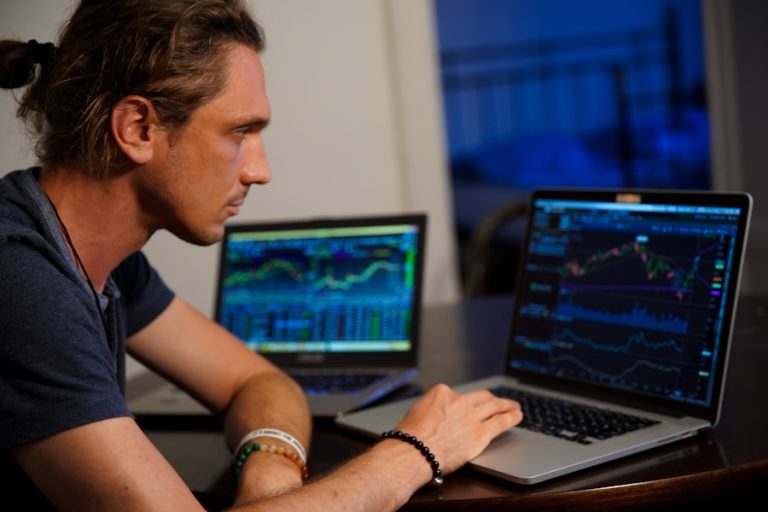
Foreign exchange, or Forex, is the world’s biggest and most liquid financial market. It is open five days a week and allows traders to buy and sell currencies from other nations. This market operates via a global network of banks, financial institutions, corporations, and individual traders rather than being restricted to a single physical location.
Key Takeaways
- The Forex market is the largest and most liquid financial market in the world, where currencies are traded 24 hours a day, five days a week.
- Participants in the Forex market include central banks, commercial banks, hedge funds, corporations, and individual traders.
- Major currency pairs such as EUR/USD, USD/JPY, and GBP/USD are the most traded and have the highest liquidity in the Forex market.
- Factors affecting Forex market movements include economic indicators, geopolitical events, and central bank policies.
- Trades in the Forex market are executed through brokers, who act as intermediaries between buyers and sellers, and can be executed through various trading platforms.
The enormous amount of transactions—often surpassing $6 trillion every day—emphasizes their importance in the world economy. Comprehending the foreign exchange market is essential for anyone wishing to trade currencies. In contrast to stock markets, which are traded on exchanges, Forex is traded over-the-counter (OTC). This indicates that trades are carried out directly between parties, frequently with the help of brokers. Forex trading is a flexible and accessible option due to its decentralized structure, which appeals to both novice and experienced investors. As we explore this ever-changing market in greater detail, I will walk you through its essential elements and how to successfully negotiate them.
There are many players in the Forex market, & each one contributes differently to its functioning. Central banks, commercial banks, hedge funds, corporations, and individual traders are the main participants. Through changes to interest rates & monetary policy, central banks like the Federal Reserve & the European Central Bank affect the value of currencies. Since their actions have the potential to cause large market movements, they are important participants in the Forex market.
In addition to trading speculatively themselves, commercial banks assist their customers with currency transactions. To profit from market swings, hedge funds and institutional investors frequently engage in high volume currency trading. Individuals like you and I, on the other hand, trade in the market through brokers as retail traders. Retail traders’ combined actions can affect currency prices, even though they might not have the same sway as larger organizations.
Gaining knowledge of these players’ identities and driving forces can help one better understand market movements and trends. The value of one currency in relation to another is represented by each pair of currencies that are traded on the Forex market. Major currency pairs, such as EUR/USD (Euro/US Dollar), USD/JPY (US Dollar/Japanese Yen), and GBP/USD (British Pound/US Dollar), are the most frequently traded pairs. Due to their tighter spreads & high liquidity, these pairs make up a sizable amount of daily trading volume.
When compared to less-traded or exotic currency pairs, major currency pairs are significant because they are stable & predictable. Due to its volatility and the strength of the US and Eurozone economies, traders frequently favor the EUR/USD pair, for example. Knowing these pairs enables traders to base their choices on market sentiment, geopolitical developments, and economic indicators. Your trading strategy can be improved and your chances of success raised by concentrating on major currency pairs. In the Forex market, a number of factors affect currency movements, so it’s critical for traders to keep up with world events. Currency values are significantly influenced by economic indicators like GDP growth rates, employment statistics, inflation rates, and interest rates.
A nation’s currency may increase in value as investors look to profit from possible gains, for instance, if it reports robust economic growth. The Forex market is significantly impacted by geopolitical developments as well. As traders respond to perceived risks, political unrest, trade agreements, or conflicts may cause currency values to fluctuate. For example, investors may rush to safe-haven currencies like the US dollar or the Swiss franc during uncertain times. You can more accurately predict market movements & modify your trading strategies by monitoring these variables and comprehending their effects.
Every trader should be aware of the various steps involved in executing trades in the Forex market. The first step is to pick a trustworthy broker who gives you access to the Forex market. You can begin making trades using a trading platform that your broker provides after you’ve funded & opened an account. You can easily set up indicators, analyze charts, and execute trades with the help of the most platforms’ user-friendly interfaces.
Whether you wish to buy or sell a currency pair must be specified when you choose to enter a trade. An example of this would be a buy order for EUR/USD if you think the Euro will appreciate versus the US Dollar. On the other hand, you would sell the pair if you believe the Euro will decline. It’s also critical to comprehend the different types of orders: limit orders enable you to specify specific entry points, whereas market orders execute instantly at current prices. Gaining knowledge of these procedures will enable you to trade with assurance & efficiency.
A useful strategy in Forex trading is leverage, which enables you to manage bigger positions with less money. With just $1,000 in your account, for example, you can control $100,000 worth of currency if your broker offers a 100:1 leverage ratio. Leverage raises risk considerably even though it can increase profits. If one is not cautious, even a slight negative change in the market can result in significant losses.
Margin, or the sum of money needed to open a leveraged position, is closely associated with leverage. One percent of the entire position size would be the required margin in our earlier example with 100:1 leverage. To effectively manage risk, one must comprehend how margin operates. Before engaging in leveraged trading, I advise exercising caution when using leverage and making sure you have a sound risk management plan in place.
There are advantages and disadvantages to trading in the Forex market, just like with any other investment opportunity. One of the main advantages is liquidity; you can enter and exit positions fast without experiencing a lot of price slippage because of the high trading volumes. Also, because the market is open around-the-clock, trading hours can be adjusted to accommodate different schedules. Nonetheless, it’s also critical to recognize the risks. If currency pair volatility is not adequately controlled, it can cause sharp price swings that could lead to losses.
Also, because leverage can amplify gains as well as losses, traders must use risk management techniques like position sizing or stop-loss orders. You can trade the Forex market more skillfully by balancing these risks against possible gains and adopting a disciplined trading style. A combination of strategy, discipline, and knowledge is needed to succeed in the Forex market. The following useful advice will help you succeed as a trader: 1. **Educate Yourself**: Keep up with the latest developments in trading tactics, economic indicators, and market dynamics.
To increase your knowledge base, make use of online resources like webinars, courses, and forums. 2. **Make a Trading Plan**: Make a thorough trading plan that details your objectives, level of risk tolerance, and methods for making and breaking trades. To preserve discipline, follow this plan. 3. . **Try with a Demo Account**: Test your tactics on a demo account before putting actual money at risk. You can hone your abilities and build confidence without worrying about money thanks to this. 4. . **Control Your Risk**: To safeguard your capital from sizable losses, always employ risk management strategies like stop-loss orders. 5. . **Stay Informed**: Stay abreast of world economic developments & news that could affect currency values.
Knowing these things will enable you to make wise trading choices. You can raise your chances of success in the ever-changing world of Forex trading by heeding these pointers and continuing to take an active approach to learning and refining your tactics. Keep in mind that perseverance and patience are essential; throughout their journey, all traders encounter ups and downs.
Remain dedicated to your objectives and embrace the process of learning!
FAQs
What is the Forex market?
The Forex market, also known as the foreign exchange market, is a global decentralized or over-the-counter market for the trading of currencies. It determines the foreign exchange rate for every currency.
How does the Forex market operate?
The Forex market operates 24 hours a day, five days a week, and is comprised of a network of banks, financial institutions, and individual traders who buy and sell currencies. Trades are conducted over-the-counter, meaning they are not centralized on an exchange.
What are the major participants in the Forex market?
The major participants in the Forex market include central banks, commercial banks, investment management firms, hedge funds, retail forex brokers, and individual traders.
What factors influence the Forex market?
The Forex market is influenced by a variety of factors including interest rates, economic indicators, geopolitical events, and market sentiment. These factors can cause fluctuations in currency values and exchange rates.
How is trading conducted in the Forex market?
Trading in the Forex market is conducted through currency pairs, where one currency is exchanged for another. The most commonly traded currency pairs include EUR/USD, USD/JPY, and GBP/USD. Traders can buy or sell these currency pairs to profit from changes in exchange rates.