Trading currencies on the international market is known as forex trading or foreign exchange trading. It is among the world’s biggest financial markets, with over $6 trillion in trading volume every day. Because of this enormous scale, traders have a plethora of opportunities to profit from changes in currency values. Having traversed this ever-changing terrain, I can guarantee that anyone wishing to pursue a career in Forex trading must have a solid understanding of the principles.
Key Takeaways
- Forex trading involves the buying and selling of currencies in the foreign exchange market.
- Currency pairs are the quotation of two different currencies, with the base currency listed first and the quote currency listed second.
- The bid price is the price at which the market is willing to buy a currency pair, while the ask price is the price at which the market is willing to sell a currency pair.
- The spread is the difference between the bid and ask prices, and pips are the smallest price move that a given exchange rate can make.
- Leverage allows traders to control a larger position with a smaller amount of capital, while margin is the amount of money required to open a leveraged position.
The ease of use & adaptability of Forex trading are its main draws. Because Forex is open twenty-four hours a day, five days a week, traders can conduct transactions whenever it is most convenient for them, unlike traditional stock markets. This flexibility is especially helpful for people who might have other obligations during regular business hours. You can enter and exit trades with relative ease because the Forex market is also very liquid. But as we dig deeper into the nuances of Forex trading, I will address the difficulties that come with this liquidity.
Currency pairs, which show how much one currency is worth in relation to another, are the foundation of Forex trading. A base currency and a quote currency make up each pair. In the EUR/USD pair, for instance, the US dollar (USD) is the quote currency and the euro (EUR) is the base currency. A price such as 1.20 for this pair indicates that one Euro is worth 1.20 US dollars. Making wise trading decisions requires an understanding of how these pairs operate.
The three primary categories of currency pairs are exotic, minor, and major pairs. Key currency pairs include the most traded ones in the world, like EUR/USD, USD/JPY, & GBP/USD. Currency pairs known as minor pairs, such as AUD/NZD or EUR/GBP, are less commonly traded but still important. USD/TRY (Turkish Lira) or EUR/ZAR (South African Rand) are examples of exotic pairs, which combine a major currency with a currency from a developing economy.
Your trading strategy may be impacted by the unique volatility and liquidity characteristics of each category. Understanding bid and ask prices is essential to successfully executing trades in forex trading. A trader’s willingness to pay for a currency pair is known as the bid price, and their willingness to sell it is known as the ask price. The spread refers to the variation between these two prices.
The spread is 20 pips, for example, if the EUR/USD pair has a bid price of 1.1990 and an ask price of 1.2010. Your trading decisions can be greatly impacted by your ability to read bid and ask prices. You pay the ask price when you purchase a currency pair, and you get the bid price when you sell. This implies that knowing these prices enables you to assess market sentiment and make informed decisions in real time.
An indication of rising demand for that currency pair could be seen, for instance, if you observe that the bid price is rising while the ask price stays the same. Understanding spread and pip values is essential to comprehending the expenses and possible gains of Forex trading. A pip, which stands for “percentage in point,” is the smallest possible price change that a particular exchange rate is capable of making according to market behavior. For the majority of currency pairs, 0.0001 is usually equivalent to a pip. Nevertheless, because of its distinct decimal structure, a pip in pairs involving the Japanese Yen (JPY) is represented as 0.01. Your cost of trading is represented by the spread, which varies according to the broker you select & the state of the market.
For day traders who execute several trades during the day, a tighter spread translates into lower trading expenses. Your possible profit margin will be greatly impacted by these expenses, for example, if you are trading a major pair with a spread of 1 pip against another with a spread of 5 pip. Therefore, in order to optimize your profits, it is imperative that you select a broker who offers competitive spreads. In Forex trading, leverage is an effective tool that lets you manage bigger positions with less money. It basically allows you to borrow money from your broker in order to boost your possible profits.
For instance, with a 100:1 leverage ratio, you can manage $100,000 in currency with just $1,000 in your account. Your risk exposure rises even though this can increase your profits. The amount of money needed to start & keep a leveraged position is known as the margin. Since margin has a direct impact on your ability to trade successfully, it is imperative that you comprehend how it operates.
Your broker may issue a margin call, requiring you to close positions or deposit additional funds in order to prevent further losses, if your account balance drops below the necessary margin level as a result of trade losses. Leverage can therefore improve your trading potential, but it’s important to use it carefully & be aware of the risks. Stop-loss and take-profit orders are useful tools for effectively managing risk in Forex trading. To reduce your possible losses, a stop-loss order automatically closes your position when the market hits a predetermined price level.
If you purchase EUR/USD at 1.2000 & set a stop-loss at 1.1950, for example, your position will close if the price falls to that level, limiting additional losses. However, by closing your position when the price hits a preset level, take-profit orders let you lock in profits. When you place a take-profit order for your EUR/USD trade at 1.2100, your position will automatically close when the price reaches that level, protecting your gains without requiring you to keep an eye on the market all the time. Your trading approach can be more disciplined and risk managed by implementing these orders into your trading strategy.
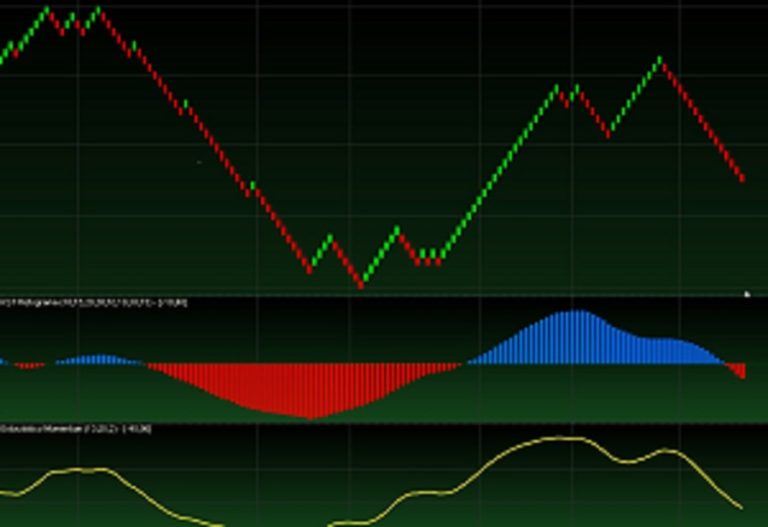
It is crucial to use both technical and fundamental analysis when making decisions if you want to be successful at Forex trading. Evaluating economic indicators, geopolitical developments, & other variables that may affect currency values is part of fundamental analysis. Currency fluctuations can be significantly impacted, for instance, by central banks changing interest rates or by important economic data like GDP growth. Technical analysis, on the other hand, uses past price data and chart patterns to forecast future price movements. A variety of tools, including oscillators, trend lines, and moving averages, are used by traders to determine possible entry and exit points for their trades.
You can create a more thorough understanding of market trends & make wise trading decisions by integrating the two analyses—interpreting price charts and comprehending economic fundamentals. For Forex traders to be successful over the long run, risk management is essential. A crucial component of this is position sizing, which involves figuring out how much money to put into each trade depending on your risk tolerance and total account balance. As a general rule, you should never risk more than 1-2 percent of your entire account balance on a single transaction.
This strategy enables long-term growth while shielding your capital from large losses. You can improve your risk management approach even more by using risk-reward ratios. Potential gains on a trade exceed potential losses when the risk-reward ratio is favorable.
For example, you have a 2:1 risk-reward ratio if you set a target profit of 100 pips & risk only 50 pips on a stop-loss order. This is an alluring offer for any trader. Through consistent application of sound risk management principles & position sizing strategies, you can become more resilient & confident when navigating the turbulent waters of Forex trading. In conclusion, a thorough grasp of a variety of ideas, from currency pairs to risk management techniques, is necessary to become an expert in Forex trading.
By arming yourself with this knowledge and consistently honing your abilities via analysis and practice, you can set yourself up for success in this dynamic financial market. Throughout your journey, every trader encounters ups and downs; what matters most is how you react and adjust. Keep in mind that patience & discipline are essential.
FAQs
What is Forex trading?
Forex trading, also known as foreign exchange trading, involves the buying and selling of currencies in the foreign exchange market with the aim of making a profit.
What is a currency pair?
A currency pair is the quotation of two different currencies, with the value of one currency being quoted against the value of another. For example, the EUR/USD currency pair represents the value of the euro against the US dollar.
What is a pip?
A pip, or “percentage in point,” is a unit of measurement used to express the change in value between two currencies. It is typically the smallest price move that a given exchange rate can make.
What is leverage in Forex trading?
Leverage in Forex trading refers to the ability to control a large position with a relatively small amount of capital. It allows traders to amplify their potential profits, but also increases the potential for losses.
What is a stop-loss order?
A stop-loss order is an order placed with a broker to buy or sell a currency pair once it reaches a certain price. It is used to limit a trader’s loss on a position.
What is a take-profit order?
A take-profit order is an order placed with a broker to automatically close a position once it reaches a certain level of profit. It is used to lock in profits and prevent potential losses.
What is a spread in Forex trading?
The spread in Forex trading refers to the difference between the bid price and the ask price of a currency pair. It represents the broker’s fee for executing a trade.
What is a margin call?
A margin call occurs when a trader’s account falls below the required margin level, and the broker requires the trader to deposit additional funds to cover potential losses. Failure to meet a margin call may result in the broker closing out the trader’s positions.